UK’s new passport rules for dual citizens are a result of border control in the digital age
New UK passport rules for dual citizens reflect the challenges of maintaining layered identities within increasingly rigid digital border systems and automated travel authorisation frameworks.

What you need to know
🔹 Dual citizens must use British passports for UK entry from 25 February 2026.
🔹 Digital border systems struggle to accommodate the complexity of transnational life.
🔹 The number of dual British-EU citizens rose significantly following the Brexit vote.
🔹 New rules create bureaucratic friction for families and those living abroad.
F rom 25 February 2026, most dual British citizens will need to use a British passport to travel to the UK. Presenting only a non-British passport will no longer be sufficient for boarding flights or ferries, unless it carries a certificate (costing £589) that confirms right of abode.
The rule was introduced to align dual nationals with the UK’s new electronic travel authorisation (ETA) system and to prevent confusion in border checks.
In legal terms, nothing fundamental has changed. British citizens still have the right to enter and live in the UK. But in practice, the way that right must be demonstrated has shifted. And that shift tells us something important about how citizenship is being reshaped in the digital age.
Over the past three decades, dual citizenship has become widely accepted internationally. In 1990, fewer than a third of countries allowed dual nationality in cases of naturalisation. By 2016, roughly three-quarters did.
This change reflected globalisation. As populations became more mobile, states adapted. Migrants often maintain attachments to more than one country. Dual citizenship is a pragmatic recognition of that reality, allowing people to belong in more than one place without forcing an exclusive choice.
According to the ONS 2021 census, 1.2% of UK-born residents (587,600) were dual citizens with another country, rising from 0.5% in 2011 (231,600). For non-UK-born residents, 6.5% were dual citizens with the UK in 2021 (648,700), up from 5.1% in 2011 (381,200).
The rise reflects broader demographic change, but it also coincided with Brexit. The number of people holding both British and EU passports increased significantly between 2011 and 2021, suggesting that many UK residents sought to retain EU citizenship protections as the UK left the EU, while some EU residents acquired British citizenship to preserve unrestricted access to the UK.
In other words, dual citizenship in the UK today includes longstanding migrant and diasporic communities, but also a growing cohort shaped by recent geopolitical change.
Digital borders
The UK’s new passport rule does not mean the country is less tolerant of dual citizens. But it is a consequence of borders becoming more digitised in recent years.
Borders today are not confined to passport control desks. They operate through airline check-in systems, pre-travel authorisations, biometric databases and algorithmic risk assessments. Airlines are required to confirm eligibility before boarding. Digital systems match names, dates of birth and passport numbers against centralised records. Such systems prioritise coherence and consistency, aiming to eliminate ambiguity.
But dual citizenship, and transnational life more broadly, produce precisely the kind of complexity that digital systems struggle to accommodate. Names may differ across jurisdictions. Marriage can produce surname changes in one country but not another. Accent marks may appear in one passport and not in its transliteration. Children born abroad may be citizens by descent but have never held a British passport.
There is little room for discretion when border checks are digitised. The administrative solution is to use the British passport when entering Britain. Yet this is not always straightforward. Some dual citizens born abroad have never needed a British passport and must now apply for one in order to travel. Others may consider renouncing British citizenship to avoid the administrative burden — but this option is not available to underage dual citizens.
Dual citizens are not a homogeneous group. They include naturalised migrants who have retained their original nationality; British-born citizens who later acquired another citizenship through residence or marriage; children of mixed-nationality families; foreign-born children of British emigrants who are citizens by descent; and members of long-established Commonwealth communities whose plural affiliations are a result of British imperial history.
For some, the new rule simply means ensuring that their British passport is valid. For others — particularly families living abroad who have never needed a British passport for their children — it introduces an unexpected bureaucratic step.
This is where borders intersect with inequality. Families with easy access to consular services, financial resources and familiarity with UK administrative systems can adapt quickly. Those living further from British bureaucratic infrastructure face greater friction.
The UK’s passport requirement is being introduced during a wider political moment in which states are exerting tighter control over citizenship. In the US, Donald Trump’s administration pledged to restrict birthright citizenship and expand the state’s power to remove citizenship.
In a number of countries, citizenship revocation powers have disproportionately targeted dual nationals, precisely because removing citizenship from mono-nationals would breach international law by rendering them stateless.
What we may be witnessing is not the retreat of dual citizenship, but its transformation. It remains widely tolerated. Yet it is increasingly bureaucratically policed.
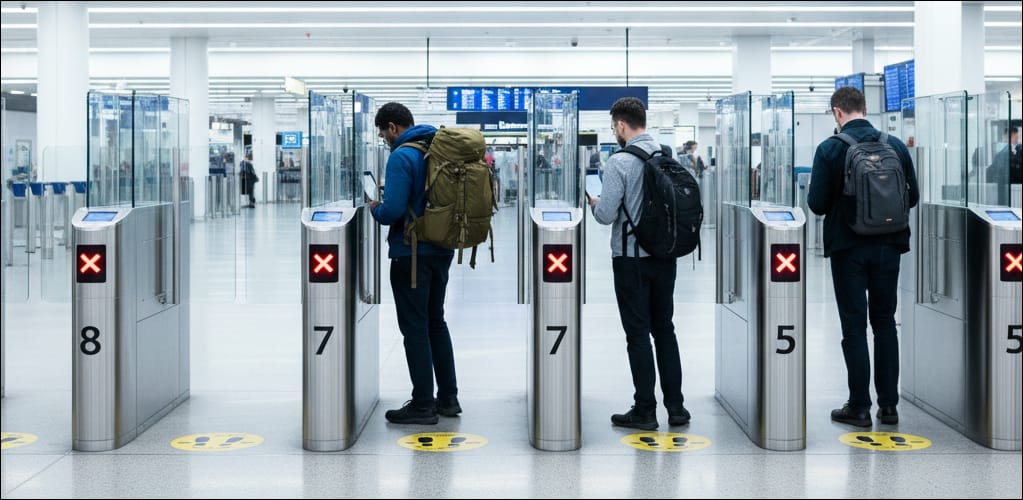
The cumulative effect is subtle but significant. Citizenship is no longer just a legal status secured once and for all. It must remain legible to digital border systems and be continuously probed through interconnected databases.
Dual citizenship emerged as recognition that identities and attachments can be layered. Digital borders, by contrast, favour clarity and singular representation. This tension is unlikely to disappear.
The UK’s move signals how, in an era of digital borders and geopolitical uncertainty, the lived experience of citizenship is being reshaped — not through headline constitutional change, but through the quiet reorganisation of administrative systems.

GOING FURTHER
Dual nationals could use expired UK passports to prove they are British, Home Office says | THE GUARDIAN
Electronic Travel Authorisation (ETA): information for dual nationals | GOV.UK
Dual nationals could be denied entry to UK under new passport rules | THE GUARDIAN
What is the UK's Electronic Travel Authorisation? | BBC NEWS
New UK border rules 'discriminatory' against dual national women | THE INDEPENDENT
The rise and rise of the dual citizen | THE ECONOMIST
UK to require digital travel authorisation for all visitors | REUTERS
Digital borders: the technology reshaping global travel | FINANCIAL TIMES
Sources:
▪ This piece was originally published in The Conversation and re-published in Europeans TODAY on 20 February 2026. | The author writes in a personal capacity.
▪ Cover: Dreamstime/Mykhailo Polenok.