What the Hormuz crisis reveals about who rules in Tehran
The closure threat in the Strait of Hormuz may be more than a military move. It may show that Iran’s Revolutionary Guards are now shaping diplomacy as well as war.

The immediate danger in the Strait of Hormuz is obvious. The deeper problem may be that Iran’s official diplomats no longer appear to control the policy they present.
That is the significance of the sharp reversal between 17 and 18 April. Iran’s foreign minister, Abbas Araghchi, said the strait was open to commercial traffic. Within a day, the IRGC Navy had attacked commercial vessels, warned ships away, and helped reduce movement through the waterway to a trickle apart from Iranian traffic.
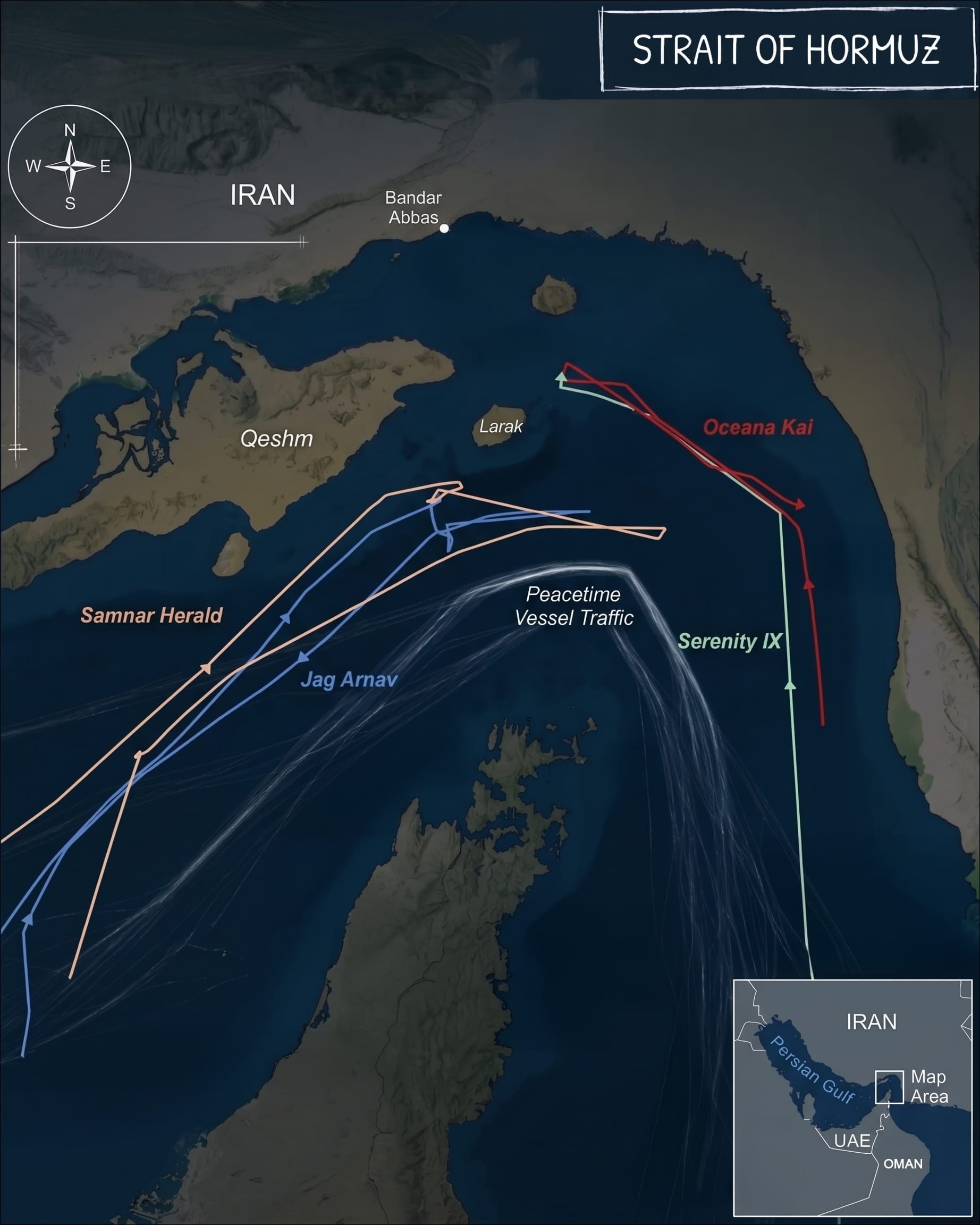
An analysis by the Institute for the Study of War and the Critical Threats Project argues that this was more than a military escalation. It may also reflect a shift in power toward the Islamic Revolutionary Guards Corps and figures around Major General Ahmad Vahidi, at the expense of Iran’s formal negotiating channel.
If that reading is correct, the implications go beyond shipping disruption. It would mean outside powers are not simply facing a harder Iranian position. They may be dealing with a system in which the men speaking in negotiations are not fully in command of the decisions that matter.
That makes every proposal less reliable, every pause more fragile, and every diplomatic signal harder to trust.

GOING FURTHER
Iran Update Special Report, April 18, 2026 | ISW
Iran Revolutionary Guard fully closes Strait of Hormuz and fires on ships trying to pass | AP
Iran says strait of Hormuz ‘completely open’ but sounds warning on US blockade | THE GUARDIAN
Iran closes strait of Hormuz again ‘until US lifts blockade’ | THE GUARDIAN
How to keep the Strait of Hormuz open in the long term | CHATHAM HOUSE
Sources:
▪ This piece was first published in Europeans TODAY on 18 April 2026.
▪ Cover: Dreamstime/KORWEN.