Sunak’s Net Zero policy shift sparks controversy
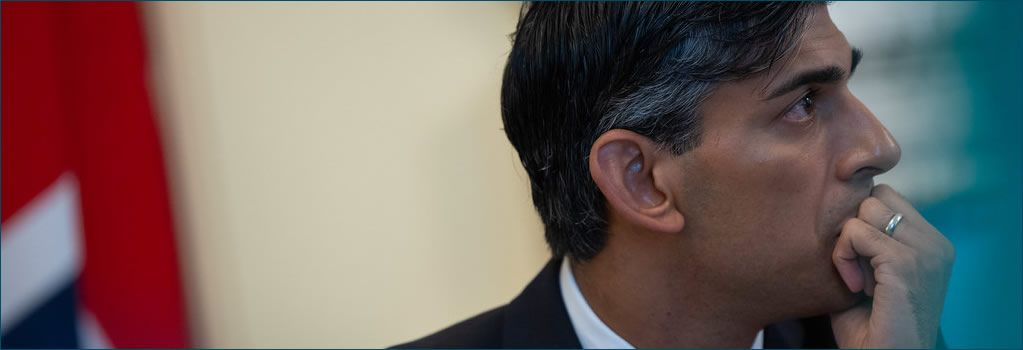
Rishi Sunak’s decision to slow down the UK’s shift to electric vehicles, postpone climate targets and scrap other plans have stirred up strong reactions from various quarters, including his own party. Does it make him a strong leader?

W hile Rishi Sunak aims to maintain the Government’s commitment to reach net zero emissions by 2050, there are concerns about postponing the phase-out of gas boilers and the ban on petrol and diesel cars. This shift in climate policy has caused consternation among Tory MPs, environmental groups, and the public.
Let’s explore the reasons behind Sunak’s stance, the implications of these changes, the motivations behind them, and the wider debate on the environmental and economic impacts.
Reconsidering Climate Commitments
PM Rishi Sunak has announced alterations to the Government’s climate goals. These changes, prompted by the recent Tory victory in the Uxbridge by-election thanks to their campaign against the expansion of the ultra-low emission zone (Ulez), have been met with mixed reactions.
First, Sunak has decided to extend the deadline for the ban on new cars with combustion engines from 2030 to 2035, citing potential cost savings for consumers. Sunak anticipates that the majority of cars sold by 2030 will be electric due to decreasing electric vehicle prices and increased consumer adoption.
However, experts disagree, suggesting that this delay exposes UK drivers to volatile international oil prices and could harm the economy by undermining investment in clean technologies.
The shift may also affect consumers, particularly those who buy secondhand petrol cars. Furthermore, the uncertainty around targets and policies could deter car manufacturers from investing in the UK.
The government also plans to weaken the phase-out of gas boilers, delaying the transition to heat pumps until 2035, which may extend the UK’s reliance on imported gas.
Critics argue that Sunak’s approach fails to consider the impact of rising natural gas prices on households and businesses and the urgent need to embrace clean energy alternatives.
The government will no longer require homeowners and landlords to meet energy efficiency targets, potentially increasing costs for renters.
Sunak’s decisions also indicate a reluctance to implement policies encouraging sustainable behaviour, such as taxing airlines and disclosing the carbon footprint of meat. While experts argue that many changes should fall on businesses, making eco-friendly choices should be more accessible and affordable for consumers.
“We’ve stumbled into a consensus about the future of our country that no one seems to be happy with.
“We seem to have defaulted to an approach which will impose unacceptable costs on hard-working British families, costs that no one was ever really told about and which may not actually be necessary to deliver the emissions reduction that we need.
“I get that lots of people out there are going to be critical of what I’m doing today – they’ll have their own views.
“The question for all those people who are criticising this approach is to ask them to justify to all those families up and down the country why they think it’s right to ask them to find £10,000, £15,000, £20,000 at a time.
“The proposal for government to interfere in how many passengers you can have in your car – I’ve scrapped it.
“The proposal that we should force you to have seven different bins in your home – I’ve scrapped it.
“The proposal to make you change your diet and harm British farmers by taxing meat, or to create new taxes to discourage flying or going on holiday. I’ve scrapped those too.”
— Rishi Sunak, Prime Minister
What’s new?
When he delivered his speech on Wednesday afternoon, Rishi Sunak confirmed:
▫ The ban on the sale of new cars and vans running solely on petrol and diesel will be delayed from 2030 to 2035;
▫ The plan to phase out gas boilers by 2035 has been weakened, ensuring that households facing difficulties in switching to heat pumps will not be required to make the change;
▫ The ban on boilers relying on heating oil in off-grid homes has been pushed back from 2026 to 2035. This extension allows off-grid homeowners more time to find alternative heating solutions;
▫ Policies that would have compelled landlords to upgrade the energy efficiency of their properties have been scrapped.
In addition, the prime minister announced the scrapping of what he called a “worrying set of proposals” that emerged during debates on net zero, including:
▫ Enforcing upgrades to home insulation within two years;
▫ The government interfering in the number of passengers allowed in cars;
▫ Requiring households to have seven different bins;
▫ Imposing taxes on meat consumption to change diets and potentially harm British farmers;
▫ Introducing new taxes to discourage flying or going on holiday.
Political Backlash
Conservatives are divided on these changes though, with some suggesting that environmental policies might harm the party’s electoral prospects.
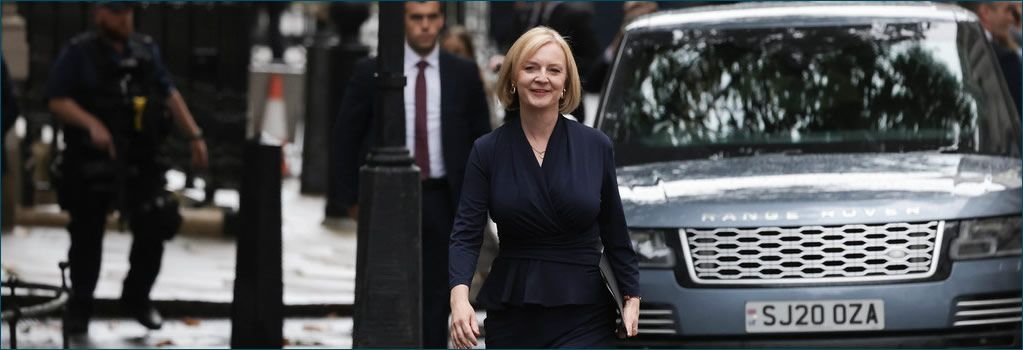
Liz Truss, for example, suggested that the UK should postpone the implementation of Net Zero commitments and abandon environmental regulations.
“We should – as many other Western countries are already doing – delay implementing Net Zero commitments such as the ban on new petrol and diesel vehicles from 2030. Other environmental regulations which are hiking the cost of living, like enforcing the replacement of gas and oil boilers, should also be abandoned.”
— Liz Truss, Former Prime Minister
In response to critics of Sunak’s decision, Home Secretary Suella Braverman emphasised the Government’s commitment to achieving net zero by 2050. However, she stated that economic growth should take precedence.
“We need to put economic growth first.
“We need to put household costs and budgets first. We need to put the cost of living first.
“And we’re only going to achieve that net zero target whereby people and the British people can go about their daily lives using their cars, using the facilities that are available to them, in a pragmatic way.”
— Suella Braverman, Home Secretary
Net Zero Watch (a campaign group launched and managed by the Global Warming Policy Forum – founded by former Tory chancellor Nigel Lawson – and the UK’s most prominent climate science denial group based at 55 Tufton Street, along with several right-wing, libertarian think tanks) welcomed the reports of the Government’s plans to delay and weaken some of its Net Zero targets.
“Net Zero Watch has long warned that current Net Zero plans are astronomically costly, technologically impossible and politically unsustainable.
“As European governments have begun to retreat from their own Net Zero plans, it was just a question of time before the UK, which has even more utopian targets, had to make a U-turn, and return to the path of economic and technological realism.
“The Home Secretary’s statement that the UK ‘is not going to save the planet by bankrupting the British people’ is a welcome acknowledgement of Net Zero Watch’s warnings that current Net Zero plans are economically self-destructive and politically irrational.
“If the reported changes turn out to be true, they could represent a significant first move towards a complete reassessment of the unilateral Net Zero targets embedded in the Climate Change Act.
“There has been a noisy backlash from green Conservatives and big corporations, arguing that delaying the ban on petrol and diesel vehicles reduces business certainty. This suggests that they have limited confidence that people will purchase EVs without an element of state coercion.
“Net Zero Watch hopes that in the coming days the Prime Minister will stick to his guns.”
— Net Zero Watch
In contrast, other Conservatives emphasise the importance of climate action.
Simon Clarke, Tory MP for Middlesbrough South and East Cleveland, warned against the consequences of responding to a single byelection by undermining key aspects of Government policy.
“Our climate is changing dramatically. The UK has carved out a world-leading role delivering net zero in a market-friendly way that will deliver clean, secure energy and thousands of jobs in deprived communities like Teesside. My Red Wall constituents overwhelmingly support it.
“We should be exceptionally careful of seeking to extract political advantage on this issue when the efforts of successive Prime Ministers – the majority of them Conservative – have been dedicated to upholding what Margaret Thatcher called a ‘full repairing lease’ on our planet.
“Businesses rely on certainty to make major investments like that just secured from Tata in Somerset. It is unclear how they are to plan at all if we respond to one byelection in west London by tearing up key planks of government policy.
“When the history of this period of Conservative government is written, our leadership on climate issues will be one of our main achievements. We are fortunate to have a broad, non partisan consensus in the UK. How does it benefit either our country or our party to shatter it?
“I am very clear: the delivery of net zero should not be a hair-shirt exercise. But I am equally clear that it is in our environmental, economic, moral and (yes) political interests as Conservative to make sure we lead on this issue rather than disown it.”
— Simon Clarke, Conservative MP, Former Minister
Chris Skidmore, MP for Kingswood and Conservatives’ Net Zero champion, expressed concern about the potential consequences of such a decision that could result in the loss of jobs and lead to investment going elsewhere.
“If this is true, the decision will cost the UK jobs, inward investment, and future economic growth that could have been ours by committing to the industries of the future.
“It will potentially destabilise thousands of jobs and see investment go elsewhere. And ultimately the people who will pay the price for this will be householders whose bills will remain higher as a result of inefficient fossil fuels and being dependent on volatile international fossil fuel prices.
“Rishi Sunak still has time to think again and not make the greatest mistake of his premiership, condemning the UK to missing out on what can be the opportunity of the decade to deliver growth, jobs and future prosperity.”
— Chris Skidmore, Conservative MP, Former Minister
Rachel Wolf, former PM Adviser and co-author of the Conservative Party’s 2019 Election Manifesto, expressed her belief that the government is diluting their Net Zero commitments in order to hinder Labour’s ability to showcase economic credibility during the election campaign, a strategy anticipated to generate stories about costs and taxes.
“My assumption is that the govt is watering down their net zero commitments because they want to make it harder for Labour to demonstrate economic credibility in the election campaign. It will be to generate cost and tax stories.
“But there’s a huge cost to this outside specifics on support for net zero (which leavers share!) – namely it is yet another thing the Tories have abandoned. Outside schools, and maybe employment, what consistent good story could you tell about about the Conservatives?
“And no, it’s not credible to repeat 2019 and appear like an entirely new administration at this point. Nor can you credibly now sound like you care about net zero. Envt was just about the only piece of domestic progress of the last few years and now you can’t talk about it.
“And from our own research, lots of the public will assume the reason the target has been watered down is because the government is too incompetent to meet it.”
— Rachel Wolf, Former PM Adviser
Sir Alok Sharma, Tory MP and President of the 26th United Nations Climate Change Conference, emphasised the importance of the UK’s leadership on climate action.
“The UK has been a leader on climate action, but we cannot rest on our laurels. For any Party to resile from this agenda will not help them economically or electorally.
“If we have countries around the world resiling from their commitments, the Earth is going to be on life support.”
— Sir Alok Sharma, Conservative MP for Reading West
Several Conservative MPs are reportedly contemplating the drafting of letters of no confidence in the Prime Minister’s leadership should he move forward with the proposed changes in Government policies. They argue that deviating from the petrol and diesel ban would break a promise made privately to Conservative MPs by Rishi Sunak.
Delaying the car ban has also elicited criticism from automotive companies investing in Electric Vehicles (EVs) and undermines their expectations.
Lisa Brankin, Chair of Ford UK, underscored the importance of the UK’s shift towards electric new car and van sales by 2030.
“Three years ago the government announced the UK’s transition to electric new car and van sales from 2030. The auto industry is investing to meet that challenge.
“Ford has announced a global $50 billion commitment to electrification, launching nine electric vehicles by 2025. The range is supported by £430 million invested in Ford’s UK development and manufacturing facilities, with further funding planned for the 2030 timeframe.
“This is the biggest industry transformation in over a century and the UK 2030 target is a vital catalyst to accelerate Ford into a cleaner future. Our business needs three things from the UK government: ambition, commitment and consistency. A relaxation of 2030 would undermine all three. We need the policy focus trained on bolstering the EV market in the short term and supporting consumers while headwinds are strong: infrastructure remains immature, tariffs loom and cost-of-living is high.”
— Lisa Brankin, Ford UK Chair
ChargeUK, the leading industry body for electric vehicle charging companies, also warned against Sunak’s decision.
“For many years the UK has been a leader in the transition to the green economy of the future. Government policies have attracted investment to the UK and created well paid, high quality jobs.
“Members of ChargeUK have committed over £6 billion to roll out EV infrastructure in all parts of the UK at an unprecedented rate, turning on a new public charging point every 20 minutes, creating good, sustainable jobs, supporting the switch to EVs and thereby reducing emissions and improving air quality for all.
“This has been made possible by a clear commitment from the UK government to decarbonise our economy, with the 2030 phase out date for new petrol and diesel vehicles 2030 acting as an essential catalyst. In his first speech as Prime Minister, Rishi Sunak said “I will place economic stability and confidence at the heart of this government’s agenda”. Today’s extremely worrying news is not consistent with economic stability or confidence. It will compromise the entire industry, and place jobs and consumer and investor confidence at risk.
“More importantly, government will penalise individual drivers who are doing the right thing. More and more people are making the transition to electric vehicles, as they have been encouraged to do. They are entitled to expect government to keep its promises and continue to support the roll out of charging infrastructure across the UK.
“ChargeUK calls on the Prime Minister to confirm that the UK government remains committed to the 2030 phase out date for new petrol and diesel vehicles and to a strong ZEV mandate.”
— ChargeUK
The Public’s Response
Finally, the UK’s global reputation as a leader in climate action is at stake, as the proposed changes could be perceived as a step back in the fight against climate change.
The public’s response to these changes remains uncertain, however, with different segments of society weighing the economic benefits against environmental responsibilities.
According to a recent poll conducted by Public First for the centre-right think tank Onward, 49% of the 4,000 voters surveyed express support for the target of achieving net zero by 2050. This figure is significantly higher than the 20% who oppose the target. Additionally, 35% of respondents back the plan to phase out gas boilers by 2035, while 27% are against it. Furthermore, 38% of those surveyed support the end of new petrol and diesel vehicle sales by 2030, with only 31% expressing opposition.
It is worth noting that among Conservative voters from the 2019 election, 40% oppose the gas boiler target and 40% oppose the vehicle policy, while only 28% and 34% respectively express support.
Opposition’s Perspective
Labour has criticised the Government’s wavering commitment to climate action. Ed Miliband for instance called it a “farce”.
“This is a complete farce from a Tory government that literally does not know what they are doing day to day.
“Thirteen years of failed energy policy has led to an energy bills crisis, weakened our energy security, lost jobs, and failed on the climate crisis.”
— Ed Miliband, Labour’s Shadow Energy Secretary
Darren Jones, Labour MP for Bristol North West and Shadow Chief Secretary to the Treasury, criticised Rishi Sunak’s leadership, highlighting the lack of knowledge of the details of the PM’s decision among ministers, including the home secretary.
“We’re going to need to talk to the car companies, who will be as surprised about these announcements as we are.
“This is a classic example of Rishi Sunak’s weak leadership. Ministers didn’t seem to know, we've just seen... the home secretary didn’t know the details. This is a chaotic approach to running the country, it’s completely unacceptable and it's harming the economy.
“You don’t announce these big changes in industrial policy via a leak from Downing Street and a late-night press release from the prime minister’s bunker – this is complete chaos.”
— Darren Jones, Labour’s Shadow Chief Secretary to the Treasury
Steve Reed, Labour/Co-operative MP for Croydon North and Shadow Environment Secretary, has confirmed that a Labour government would stick to the target.
“We would keep (the target on banning new diesel and petrol cars) at 2030 because that's what businesses had been investing for.
“Rishi Sunak is stuck in the past here, he wants to keep household bills high.
“Policy can change on a whim with a late-night leak, a midnight press release and a speech brought forward like this.
“What the prime minister announced today was selling out the biggest opportunity of the 21st century – and that is for Britain to lead the world in the transition to a new green economy.”
— Steve Reed, Shadow Environment Secretary
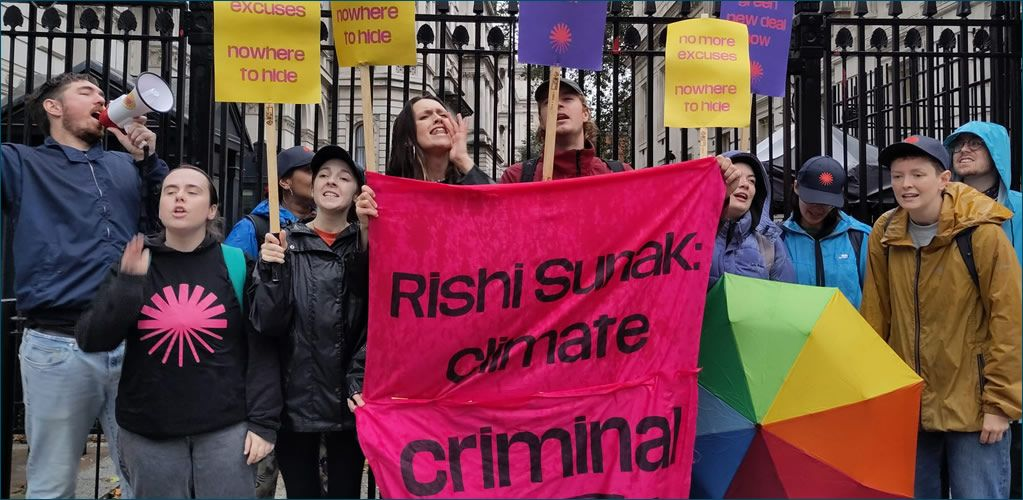
Climate groups and environmental organisations, like Friends of the Earth, have expressed concerns about the potential rollback of climate commitments.
“Rishi Sunak is being environmentally reckless and economically inept.
“Building a green economy is the best way to tackle the cost-of-living crisis, boost energy security and strengthen the economy. Weakening these green policies will simply undermine business confidence and put British jobs at risk.
“The government is already being taken to court over its weak and feeble climate action plan, which we say is unlawful. If this current package is weakened further, and in a way that’s not transparent about delivery risks, then further legal challenges are inevitable.
“With the world in the midst of a climate crisis we need bold political leadership – not another Prime Minister posturing to a narrow section of his own party for perceived short-term electoral gains. The consequences won’t just fall on people in the UK – they will reverberate globally.”
— Mike Childs, Head of Policy at Friends of the Earth
Hannah Martin, co-Director of Green New Deal Rising, expressed her disappointment with the government’s actions, stating that they are not fulfilling their promises and disregarding the urgency of the climate crisis.
“Once again this Government has shown that they are hell-bent on breaking their promises and doing nothing to stop climate chaos. Just weeks after the hottest summer on record Rishi Sunak has decided to ignore science and stoke a culture war.
“Whilst global leaders are meeting to discuss how to tackle the climate crisis, he has stayed home to set fire to some of the only remaining climate policies this Government had left.
“Not only will the UK miss out on the opportunity to create millions of good green jobs and secure our energy future, we will be once again seen as a laggard as we duck out of doing our fair share to tackle the biggest existential crisis we face.”
— Hannah Martin, Co-Director of Green New Deal Rising
Academics & Economists
Several academics and economists have also expressed their opinions on Rishi Sunak’s decision.
Professor Dave Reay, Professor of Carbon Management & Education at the University of Edinburgh, expressed his strong disapproval of the decision to roll back on emissions cuts for short-term political gain.
“It’s not pragmatic, it’s pathetic. This rolling back on emissions cuts for short-term political gain will undermine the transition to net zero and with it the future opportunities, prosperity and safety of the entire country.”
— Professor Dave Reay, Professor of Carbon Management & Education, Director the Edinburgh Climate Change Institute (ECCI) at the University of Edinburgh
Professor Edward Hawkins, Professor of Climate Science at the University of Reading, emphasised the link between burning fossil fuels and the production of carbon dioxide, which in turn leads to global warming.
“Burning fossil fuels produces carbon dioxide which causes global warming which amplifies the consequences of extreme weather events, as we have so clearly seen this summer. Climate change will continue until we reach net zero globally, and we will then have to suffer the consequences of that warmer world for decades or more. It also matters how we reach net zero, not just when – delaying action means more emissions which means more severe consequences.”
— Professor Edward Hawkins, Professor of Climate Science at the University of Reading
Lord Nicholas Stern, a former Chief Economist and Member of the House of Lords, warned that frequent changes in policy would undermine the trust of businesses, particularly in relation to climate commitments.
“Chopping and changing will raise serious questions with businesses who see a government who cannot be trusted to follow through on policy commitments, be they climate or otherwise.”
— Lord Nicholas Stern, Former Chief Economist, Member of the House of Lords
Luke Murphy, Associate Director at the Institute for Public Policy Research (IPPR), explained that rolling back on net zero policies would have negative consequences.
“Rolling back on net zero policies would put Rishi Sunak on the wrong side of the public, the economics, and history. It would be bad for consumers who will benefit from a faster transition to net zero – these proposals will make us all more reliant on volatile, expensive, imported fossil fuels. The last Conservative PM to ‘cut the green crap’ cost UK households billions in higher energy bills.
“It would be bad for our economy. The race to net zero is the economic opportunity of the 21st century and investors need stability and certainty. While other countries race ahead, the UK is going into reverse gear. What is the point of investing half a billion pounds of public money in an electric battery factory only to abandon the petrol and diesel phase-out?
“It is bad for our environment. While briefings suggest that there is no intention to remove the headline net zero 2050 commitment, abandoning or delaying the key measures to get the UK there, will have the same effect.”
— Luke Murphy, Associate Director at the Institute for Public Policy Research (IPPR)
Rishi Sunak’s decision to alter the UK’s climate policies has sparked intense debates. The delicate balance between addressing environmental concerns and mitigating economic impacts is at the forefront of discussions.
The potential consequences of delaying the transition to electric cars and the continued use of gas boilers are raising questions about the nation’s ability to meet its net zero emissions target by 2050.
These proposed changes have triggered divisions within the Tory party, concerns within the automotive industry, and criticism from opposition parties and environmental groups.
Ultimately, the voters hold the power to determine the direction of regulations, climate policies, and pollution levels in the next general election. Rishi Sunak proposes a platform of reduced regulations, less emphasis on climate policies, and potentially increased pollution. On the other hand, Keir Starmer will want to continue with climate policies that not only impact individual lives but also work towards mitigating the effects of climate change for the benefit of all.
It is crucial for voters to carefully consider the long-term consequences of their decision, as it will shape the future of both their own lives and the global environment.

Sources:
▪ Text: This piece was first published in Europeans TODAY on 20 September 2023.
▪ Cover: Flickr/Number 10. (Licensed under a Creative Commons Attribution-ShareAlike 4.0 International License.)