What is fuelling the wildfires in France and Spain?
France and Spain’s wildfires show how climate-heated landscapes, human ignition and dry fuel are turning ordinary sparks into exceptional European emergencies.

🔍 WHY THIS STORY MATTERS
Europe’s wildfire risk is becoming more immediate for us all, affecting public safety, travel, health, local economies and climate preparedness across France, Spain and beyond.
KEY TAKEAWAYS...
● Extreme heat, drought and dry vegetation are making fires harder to control.
● Human activity often starts wildfires, but that does not mean most are deliberate arson.
● Current evidence does not support blaming farmers or vineyards for the fires.
● France and Spain’s fires differ from Amazon fires, where deforestation and land-clearing pressures are central.
F rance and Spain are facing a wildfire crisis driven by a dangerous mix of heat, drought, fuel and human ignition. The central point is not that one group is ‘behind’ the fires, but that Europe’s fire conditions have become easier to ignite and harder to control.
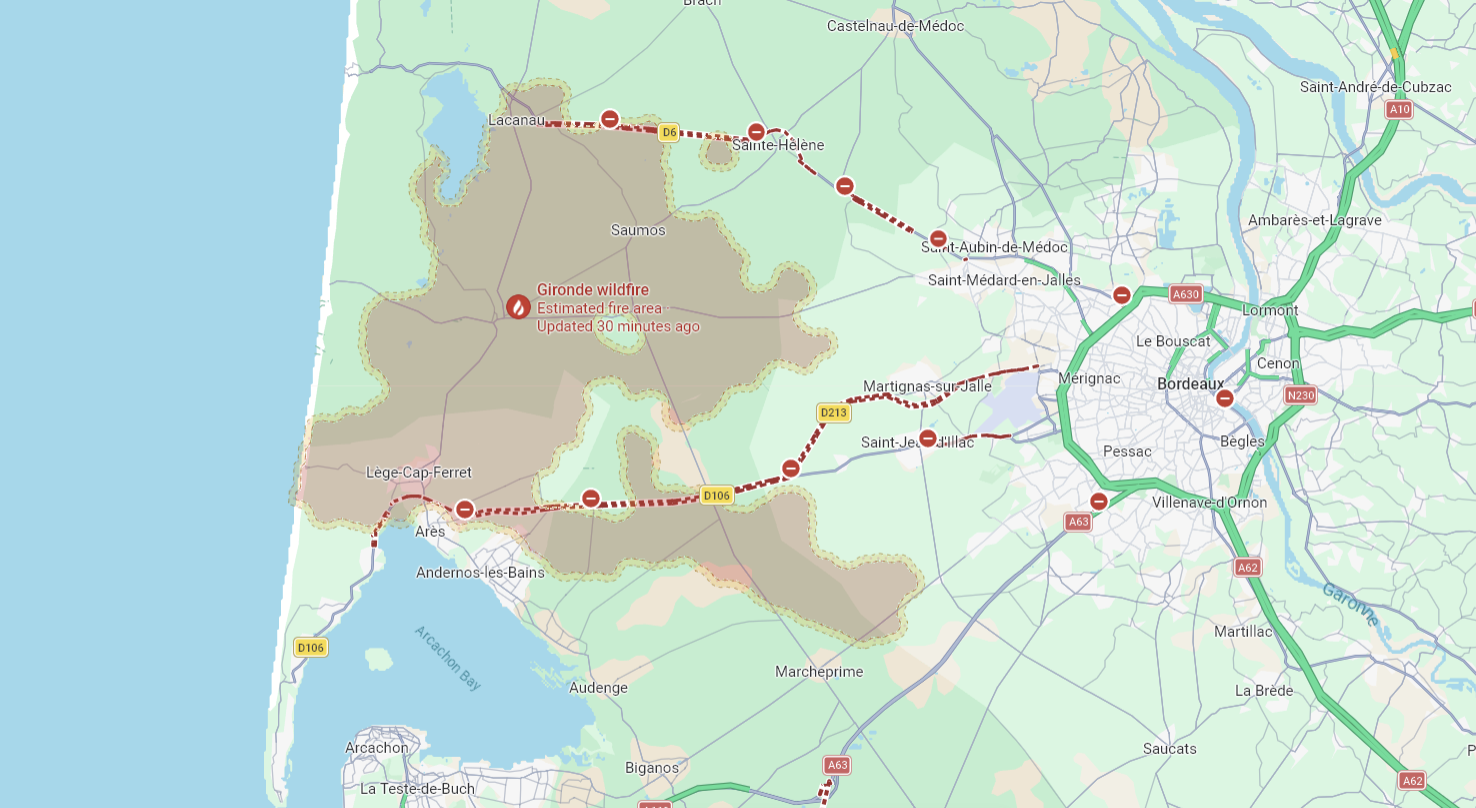
In Spain, a fire in Ávila, west of Madrid, has burned about 50,000 hectares, making it the country’s largest recorded fire. Fires near Madrid have scorched tens of thousands more hectares. In south-west France, a major blaze in Gironde has burned about 42,000 hectares and forced mass evacuations near Bordeaux.
The immediate fuel is vegetation. An unusually wet winter helped grasses, pine needles, twigs and other “fine fuels” grow. Low rainfall and repeated heatwaves then dried that material out. Once these fuels ignite, flames can move into shrubs, roots and deeper litter, which burn hotter and longer.
CONTINUE READING...
MEMBERSHIP OPTIONS:
£3/month ∙ £5/month ∙ £7/month
You can cancel anytime.
BECOME A MEMBER
Already a member? Sign in here!
BENEFITS OF MEMBERSHIP:
✅ Read exclusive member-only articles
✅ Read our daily review of the UK front pages
✅ Receive every new article by email
✅ Access all our articles
✅ Get Special Discounts with our partners
✅ Join the conversation: Comment our articles
✅ Access our archives
✅ More importantly: Support independent journalism and keep the magazine going