Will Andy Burnham really risk a spring 2027 general election?
Andy Burnham can legally call a 2027 election, but surrendering Labour’s 166-seat majority while polling points towards a hung parliament makes the gamble difficult to justify.

🔍 WHY THIS STORY MATTERS
Speculation about an early election matters because Burnham’s mandate, Labour’s huge Commons majority and his unfinished reform programme pull in opposite directions as the government approaches a pivotal Budget.
KEY TAKEAWAYS...
● Andy Burnham has publicly ruled out an election before 2029, but an early dissolution remains constitutionally possible.
● Labour currently has 403 MPs and a working majority of 166, giving Burnham an unusually valuable parliamentary cushion.
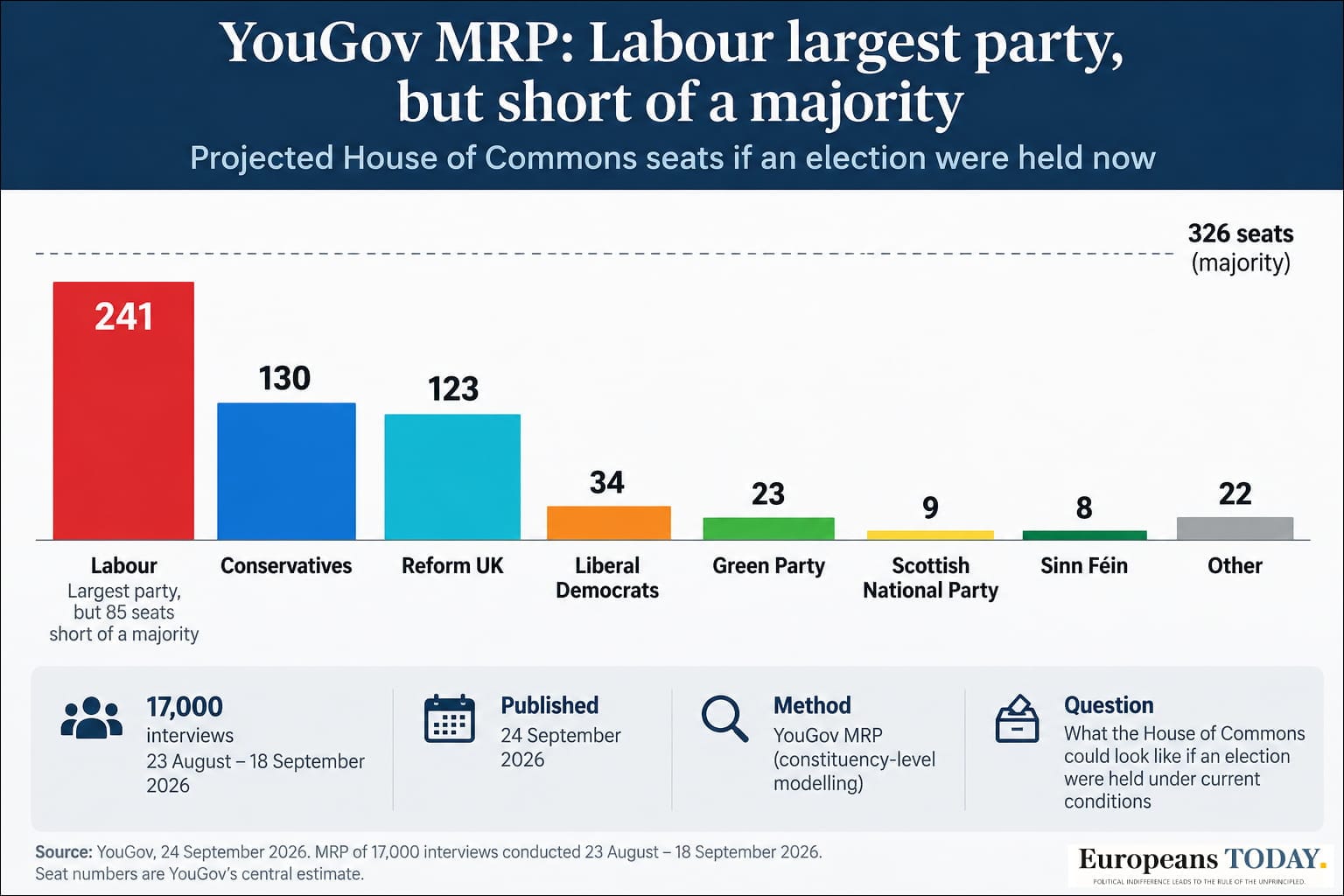
● A YouGov’s September MRP projected Labour as the largest party with 241 seats but without an overall majority.
● The 28 October Budget, subsequent polling and Burnham’s language will provide important tests of whether the political calculation changes.
T here is a peculiar ritual in British politics. A prime minister is asked whether there will be an early general election. The prime minister says no. Westminster immediately begins wondering when the early general election will be.
Andy Burnham has gone further than the customary dodge.
Asked in September whether he might seek a fresh mandate before 2029, Burnham said he could “knock that dead”. Asked whether the election would therefore be in 2029, he answered yes. He also argued that calling one simply because it suited him politically would be self-serving.
That sounds conclusive.
And yet, barely a week later, the spring 2027 election story was still alive.
The i newspaper reported on 2 October, through anonymous sources described as close to Downing Street, that a May 2027 election remained a possibility, with one source reportedly describing a potential “sweet spot” if Burnham’s political momentum survived the autumn. The report suggested the reception of the 28 October Budget and the durability of the so-called Burnham bounce could influence the calculation. This is anonymous-source reporting, however: it shows the idea is being discussed and briefed; it does not establish that Burnham has decided to call an election.
Kemi Badenoch has added fuel to the speculation, arguing that some of Burnham’s promises being framed for after the next election make an earlier contest plausible. But that is an opposition politician's interpretation of his strategy, not evidence of an election plan.
So what is actually going on?
The first thing to understand is that Burnham can call an early election.
Under the current constitutional arrangements, the Prime Minister can ask the King to dissolve Parliament before its maximum term expires. The Parliament elected in 2024 first met on 9 July 2024 and, without an early dissolution, would automatically dissolve on 9 July 2029. The latest possible polling day would be 15 August 2029. No statutory rule forces Burnham to wait until then.
So May 2027 is constitutionally perfectly possible.
Politically, there is also an obvious argument for doing it.
Burnham became Prime Minister without having written the manifesto on which Labour won the 2024 election. He has already made clear that he would have done things differently, while simultaneously saying that the government must honour the programme on which Labour was elected.
That creates an awkward problem.

Imagine moving into a house where you have been given the keys, a huge living room and four bedrooms, but the previous owner has left instructions for what you are allowed to do with the living room.
Burnham can govern. He can change priorities. He can introduce legislation. But the more radically he wants to depart from Labour’s 2024 offer (on social care, Britain’s relationship with Europe, electoral reform or the role of the state), the stronger the political argument becomes for asking voters to approve his programme rather than continuing indefinitely on Sir Keir Starmer’s.
That is the mechanism behind the spring-election theory.
Win an election in 2027, and Burnham could claim his own mandate, reset the political clock and potentially govern until 2032. Do it while his personal ratings are relatively strong, before the inevitable wear and tear of government accumulates, and the temptation becomes understandable.
There is just one enormous problem.
Burnham already has a majority of 166. Labour currently has 403 MPs.
And the available polling does not suggest that Burnham could confidently reproduce anything resembling it.
A large YouGov MRP study (published on 24 September and based on nearly 17,000 interviews conducted between 23 August and 18 September) estimates that an election held under those conditions would leave Labour with 241 seats: the largest party, but 85 seats short of an overall majority. Conservatives are projected on 130 and Reform UK on 123.
That is not a forecast of what would happen in May 2027. Opinion can change dramatically in seven months. But it exposes the strange nature of the proposed gamble.
Burnham would be voluntarily surrendering a 166-seat working majority in the hope of winning another election at a moment when one of Britain’s leading electoral models suggests he might instead emerge needing other parties to govern.
Nor do the headline polls reveal an irresistible electoral window. A YouGov 27–28 September poll put Reform UK on 25%, Labour on 24% and the Conservatives on 19%. Ipsos produced a better Labour result earlier in September with Labour 27%, Reform 23% and Conservatives 21%, illustrating just how unsettled the electorate remains.
That distinction matters.
Andy Burnham can be personally popular without Labour having an election-winning coalition of voters large enough, and geographically efficient enough, to produce a Commons majority under first-past-the-post.
And there is another clue hiding not in the polling but in Burnham’s own programme. His government is talking about some of its largest reforms as projects that need time.
In late September, Labour figures discussing Burnham’s proposed social-care reforms explicitly described having time to persuade the public, with strategists contemplating a period of almost three years in which to build support. Key funding questions were still unresolved.
That does not sound much like a government preparing to ask the country to vote on a finished programme in seven months.
Which brings us to the important part.
The strongest evidence against a spring 2027 general election is not Burnham’s denial. Prime ministers can change their minds. Political circumstances change. A categorical statement today is a political commitment, not a constitutional lock.
The stronger argument is that, on the evidence currently available, an early election would ask Burnham to exchange something extraordinarily valuable and certain (a 166-seat majority) for something much less valuable and highly uncertain.
That is the real calculation.
And it also explains why the rumours should not simply be dismissed.
If the calculation changes, the decision could change.
The first important test comes on 28 October, when the government delivers its Budget. If the Budget is received well, living standards and economic sentiment improve, Burnham retains strong personal support and Labour begins showing a sustained Commons majority across several polls and MRPs, then the attraction of seeking his own mandate would grow considerably.
If, by January or February, Labour were consistently heading towards a majority rather than a hung parliament, the sentence “there will be no early election” would become considerably more expensive politically to maintain.
A ghost is also wandering around this calculation wearing leopard-print shoes.
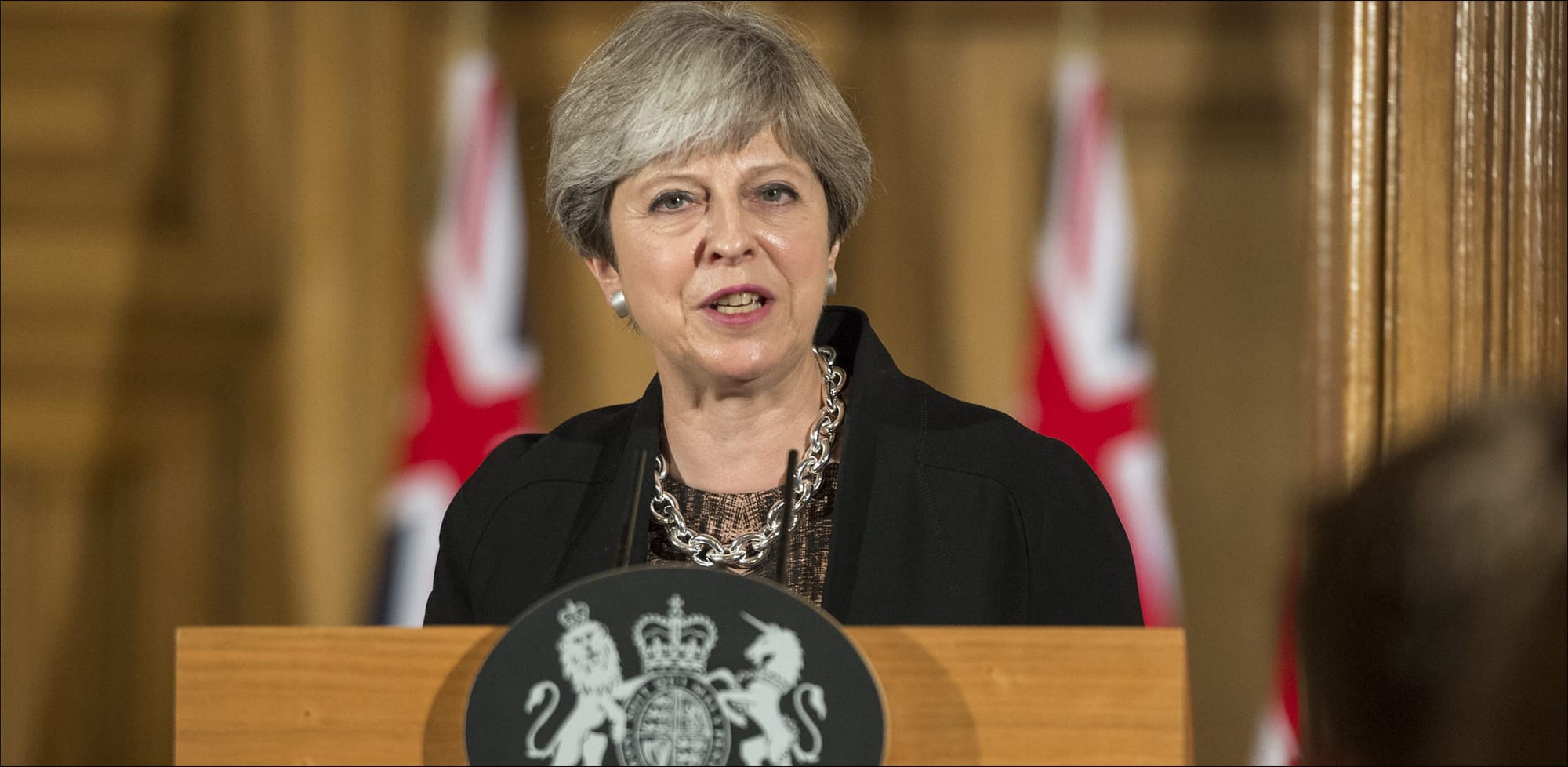
Theresa May entered 2017 with a Conservative majority and called an election she did not need to call. The Conservatives had won 330 seats in 2015; after the snap election they returned only 317 and lost their parliamentary majority.
Burnham’s starting majority is vastly larger than May’s was. But the lesson sitting on every Downing Street strategist’s desk is the same: the majority you already possess is real; the majority promised by an opinion poll is imaginary until the votes have been counted.
So, will there be a general election in spring 2027?
Nobody outside the very small circle around the Prime Minister can know, and the public evidence does not show that a decision has been made.
But as of 4 October 2026, our assessment of that evidence is that an election in spring 2027 is possible but unlikely.
The rumours are substantial enough to take seriously because there is a coherent political reason for Burnham eventually to want his own mandate, and because credible reporting shows that the merits of an early election have been discussed around Westminster. But discussion is not decision, and the electoral arithmetic currently points in the opposite direction.
In fact, the most useful question is no longer:
Do we believe Andy Burnham when he says 2029?
It is:
What would have to happen for breaking that promise to become worth the risk?
Watch the Budget. Then watch whether Labour’s polling advantage becomes sustained enough to translate into an actual parliamentary majority. Finally, watch Burnham’s language. A move from “2029” to phrases such as “I’m focused on governing”, “There are no plans” or “I’m not going to speculate” would be far more revealing than another Westminster rumour.
For the moment, Burnham has something most prime ministers would give almost anything to acquire: four hundred Labour MPs and a majority of 166.
Calling an election to improve on that would be quite a bet.
🔮 WHAT MATTERS NEXT...
🎯 WHAT TO WATCH NEXT:
● The 28 October Budget is the first major test: a strong reception could improve Labour’s political room for manoeuvre, while economic or fiscal trouble would strengthen the case for waiting.
● Watch whether Labour develops a sustained polling advantage rather than relying on Burnham’s personal popularity; recent voting-intention polling remains volatile and the September YouGov MRP pointed to a hung parliament.
● Watch the timetable for social care and electoral reform. Burnham has presented major elements of both as policies requiring further development and, in important respects, endorsement at the next election.
● Watch Burnham’s wording. A retreat from his categorical commitment to 2029 towards less definite formulations would be a meaningful political signal, although not proof that an election had been decided.
🎯 MOST LIKELY OUTCOME:
● On the evidence available on 4 October, Andy Burnham is more likely to preserve Labour’s large existing Commons majority than risk exchanging it for the uncertain prospect of a fresh mandate in spring 2027.
🎯 WHAT COULD CHANGE THE PICTURE:
● A favourable Budget followed by sustained economic improvement and repeated polling or constituency modelling showing Labour capable of winning another overall majority would materially strengthen the argument for an early contest.
🎯 WHY THIS MATTERS:
● The election question is ultimately a test of whether securing Burnham’s personal mandate becomes politically more valuable than protecting the unusually large parliamentary majority he already controls.

GOING FURTHER
No general election before 2029, Andy Burnham says | THE GUARDIAN
Andy Burnham pledges a radical shake-up for Britain in a high-risk political speech | ASSOCIATED PRESS
Andy Burnham's 'jam tomorrow' vision | FINANCIAL TIMES
Andy Burnham to fight next election with plan for NHS-style care service | THE GUARDIAN
From Brexit to electoral reform: key takeaways from Andy Burnham’s conference speech | THE GUARDIAN
‘We have time to make our case’: Labour insiders are confident Burnham can sell his social care reforms | THE GUARDIAN
Does the EU want Britain back? | FINANCIAL TIMES
Andy Burnham brings good vibes to Labour's annual conference but tough choices are coming | ASSOCIATED PRESS
Sources:
▪ This piece was first published in Europeans TODAY on 4 October 2026.
▪ Cover: Flickr/Number 10. (Licensed under a Creative Commons Attribution-ShareAlike 4.0 International License.)