Andy Burnham and climate change: Where does the prime minister really stand?
Andy Burnham’s climate agenda faces scrutiny as net-zero commitments collide with North Sea drilling, energy-security arguments, household bills and tighter public spending.

🔍 WHY THIS STORY MATTERS
UK decisions on energy spending, North Sea production and household bills will test whether the government can reconcile its net-zero commitment with immediate fiscal, security and cost-of-living pressures.
KEY TAKEAWAYS...
● Burnham has reiterated the UK’s commitment to net zero by 2050 while presenting the transition as a route to jobs, cheaper energy and industrial renewal.
● More than £3 billion of energy-programme cuts and the approval of Jackdaw have intensified scrutiny of how those commitments translate into policy.
● The government argues domestic production can support energy security, while critics dispute whether additional North Sea supply materially lowers household bills.
● Rosebank remains a significant test because its scale, emissions and expected exports sharpen the tension between fossil-fuel development and climate objectives.
S ince becoming prime minister, Andy Burnham has set out a relatively ambitious political agenda. He has outlined plans for a national care service, a “Great British Grid” and suggested a rethink of the UK’s relationship with the European Union.
But one big omission of Burnham’s agenda is climate policy. Amid the proposals that put clear water between him and his predecessor Keir Starmer, Burnham’s climate agenda remains unknown.
The prime minister has reiterated his intention to reach net zero by 2050 (though this target is contentious due to whether it actually reflects climate science as well as the extent to which it depends upon as yet unavailable technology). He has also pledged to attend Cop31, the UN climate summit currently underway in Turkey, in person. However, the budget – Burnham’s first real opportunity to set out his vision – raised concerns about whether his political rhetoric could translate into a coherent climate policy.
The budget revealed that increased defence spending would come at the cost of £3 billion of cuts at the Department for Energy Security and Net Zero. Subsidies for heat pumps, boilers, the warm homes plan, hydrogen and carbon capture and storage were the most prominent policies to be culled.
This not only limits the UK’s green industrial policy, but suggests that energy security is still not considered to be part of national security.
Energy security and rising bills
For years, the UK has been misaligned with its own carbon budgets set under the Climate Change Act 2008. After the Conservatives began to question the objective of net zero towards the end of their term in office, the election of the first Labour government in 14 years was expected to mark a turning point.
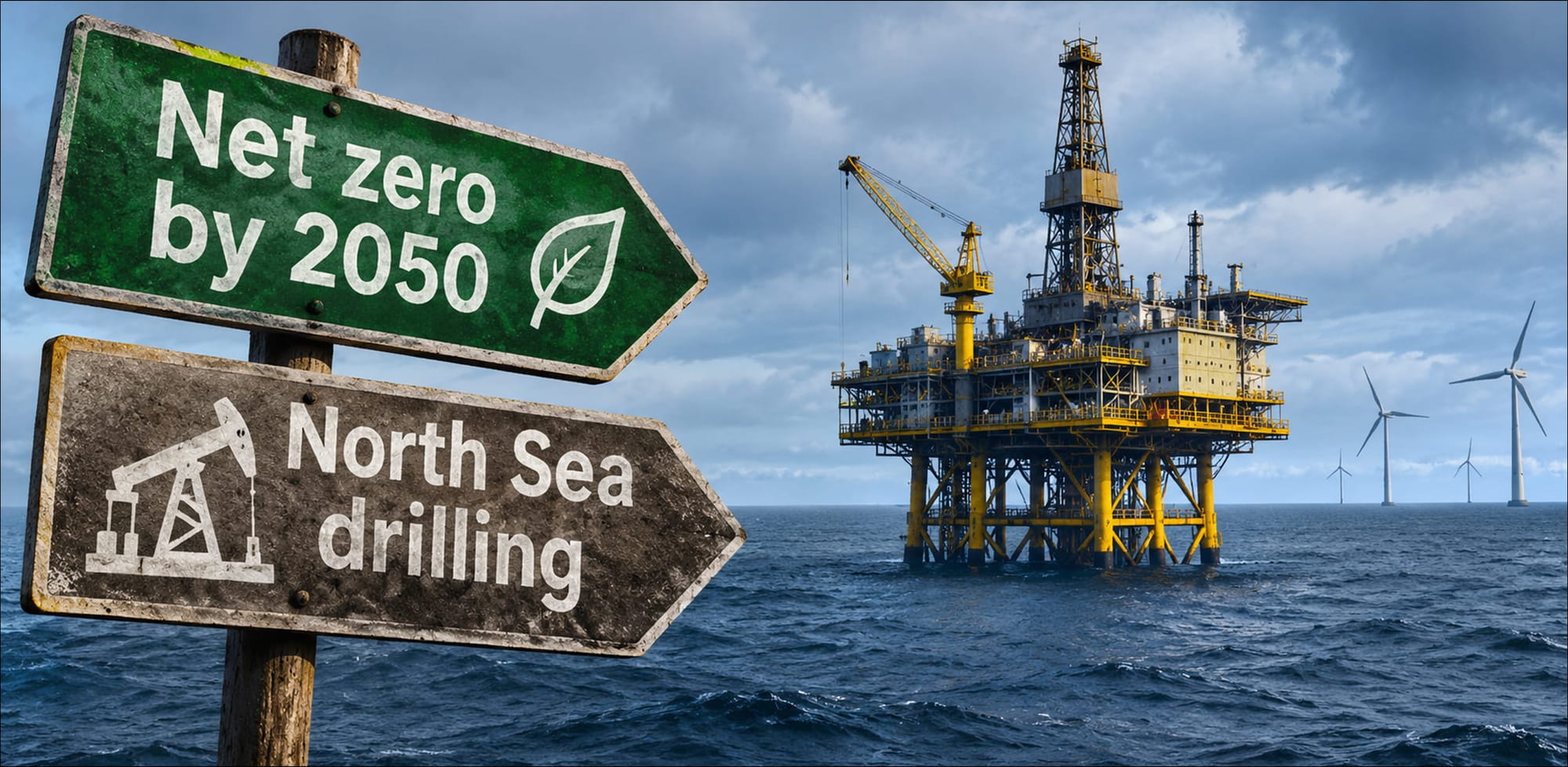
Burnham’s climate position has become entwined (and somewhat undermined) by energy security concerns following the so-called fossilflationary pressures caused by the US and Israel’s conflict with Iran. This has fed into the licensing of the Jackdaw gas field 150 miles east of Aberdeen. This is part of Burnham’s self-described “pragmatic” approach to new drilling in the North Sea.
The initial justification was that the move would improve energy security by increasing the domestic supply of oil and gas. But critics say that increasing supply has little to no effect on domestic bills, as prices are set by international markets. Revenues made from the project will be used to finance an Energy Wealth Fund to invest in green technologies elsewhere.
Then there’s the cost of living. As winter approaches, an increasing number of households will have to choose between heating and eating. In response, Chancellor John Healey’s budget removed green levies from consumer bills. These levies fund environmental programmes such as renewable schemes, but the money will now be sourced from general taxation.
This does reduce bills in the short term. But the shift, combined with other cuts, raises doubts over the long term.
It’s argued that removing green levies from bills will reduce the relative cost of energy. This is a salient argument as the UK approaches a period of higher energy demand to heat the country’s homes. But critics say that reducing support for green energy infrastructure will delay the advent of abundant cheap energy.

Political and economic tests
Labour now has two challenges. The first is the political bind the party finds itself in. Its manifesto does not contain anything resembling an ambitious climate policy. Although Burnham represents a change at the top, he has not won the right to depart from the platform upon which Starmer was elected.
Whether this represents a constraint on Burnham’s political vision or just more of the same on a limited climate policy is up for debate.
The second is an economic bind due to the UK’s tight fiscal position. This is despite taxation being at a historically high level – much of which has come from “fiscal drag” as taxpayers are pulled into higher tax bands.
The broader issues are that ten-year UK gilt yields – the rate the government pays on its debt – have risen to 5.13%. The irony of the rise in gilt yields is that they have increased primarily because of “fossilflation” as supply-side shocks have fed into energy prices.
As a result, the Bank of England has raised interest rates for the first time in three years, to 4%. This will further increase borrowing costs and make life less affordable for UK households.
And yet Labour’s propositions only put its climate policy into further doubt. It remains to be seen whether it will grant a licence for the Rosebank oil field, west of Shetland, which is larger than Jackdaw. Unless the government bends to political pressure, Burnham and energy secretary Miatta Fahnbulleh could make the same arguments about energy security again.
In the meantime, Burnham has signalled his desire to raise tariffs on Chinese green technology to align the UK more closely to the EU. This would be a bid to answer security worries, but tariffs on the cheapest and largest source of green technology places climate second to geopolitical concerns.
Under Burnham, climate policy has, at best, been lost amid the prime minister’s broader political platform. At worst, he has concluded it is a price worth paying to achieve his other objectives.
🔮 WHAT MATTERS NEXT...
🎯 WHAT TO WATCH NEXT:
● Watch the government’s decision on Rosebank, where ministers face competing energy-security, economic and climate arguments.
● Watch whether the cuts to energy programmes materially alter delivery plans for heat pumps and other decarbonisation measures.
● Watch how Burnham presents the UK’s climate and energy strategy at Cop31 while defending the government’s approach to North Sea production.
● Watch for changes to electric-vehicle policy and other implementation measures that could clarify how ministers intend to reconcile near-term pressures with the 2050 target.
🎯 MOST LIKELY OUTCOME:
● If fiscal and energy-security pressures persist, climate policy is likely to remain shaped by case-by-case compromises rather than a single overriding priority.
🎯 WHAT COULD CHANGE THE PICTURE:
● A different decision on Rosebank, restored support for low-carbon programmes or further changes to energy prices could materially shift the balance between the government’s climate commitments and its immediate economic priorities.
🎯 WHY THIS MATTERS:
● The practical test is whether the government’s individual energy, spending and industrial decisions collectively remain consistent with the net-zero commitment Burnham has publicly reaffirmed.

GOING FURTHER
Andy Burnham: UK must fully commit to reaching net zero by 2050 | The Guardian
Climate always comes second: are green issues slipping down Burnham's agenda? | The Guardian
Andy Burnham vows UK will hit net zero target despite Jackdaw gasfield approval | The Guardian
Energy secretary leaning towards rejecting Rosebank oilfield | The Guardian
Burnham in danger of sleepwalking into climate disaster, say campaigners | The Guardian
Rosebank oilfield would not breach UK emission targets, say government insiders | The Guardian
Climate damage would obliterate any economic benefits of new North Sea fields, analysis shows | The Guardian
Sources:
▪ This piece was originally published in The Conversation and re-published in Europeans TODAY on 10 November 2026. | The author writes in a personal capacity.
▪ Cover: Flickr/NUMBER 10. (Licensed under a Creative Commons Attribution-ShareAlike 4.0 International License.)