Farage vows mass deportation as Reform attacks asylum guidance
Reform says the new Home Office asylum guidance proves that migrants pose a threat, while Nigel Farage promises universal detention and deportation. Official evidence does not support that conclusion or explain how it would work in practice.

🔍 WHY THIS STORY MATTERS
Reform is linking new asylum guidance to wider claims about migrants while Nigel Farage promises universal detention and removal. The evidence supports some underlying facts, but not all the conclusions being drawn from them.
KEY TAKEAWAYS...
● The Home Office has issued new behavioural guidance for asylum seekers.
● Official data do not establish Reform’s implied population-level crime claim.
● Asylum seekers and illegal migrants are not interchangeable categories.
● Farage’s pledge leaves major questions over identification, detention, removal capacity and cost.
N igel Farage has pledged to detain and deport “every illegal migrant” as Reform UK escalated its attack on new Home Office behaviour guidance for asylum seekers. Reform published the statement on 21 August.
Reform published Farage’s statement on Friday after its home affairs spokesman, Zia Yusuf, said the guidance showed the government knew illegal migrants “are a menace”, particularly to women.
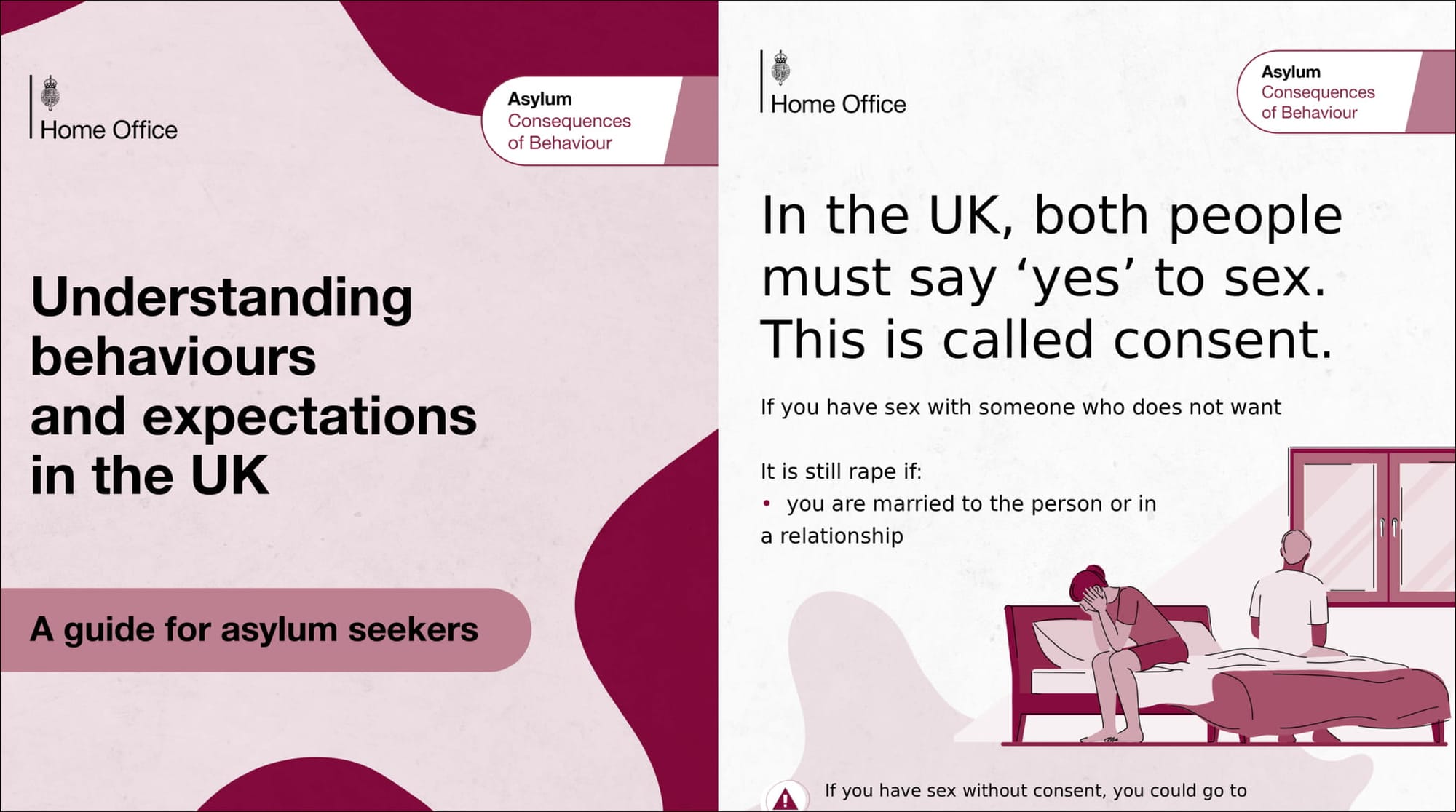
The nine-page Home Office guide explains UK law and expectations covering gender equality, domestic abuse, sexual consent, harassment and behaviour in public. It warns that breaking the law can affect an asylum claim. The Home Office said everyone coming to Britain was expected to obey UK law.
The document does not establish the population-level claim Reform is making. The Office for National Statistics said in January that it does not hold crime figures broken down by asylum-seeker or migrant status. Its data therefore cannot show whether asylum seekers offend at a higher, lower or similar rate to a comparable UK population.
Reform’s language also moves between asylum seekers and illegal migrants, although official statistics distinguish between route of entry and asylum status.
Home Office figures for the year ending March 2026 show that 52% of people who claimed asylum had arrived through routes classified as illegal, typically small boats. Another 39% had previously entered with a visa or other valid leave, while 8% came through other or unmatched routes. The same statistics show 62% of asylum claimants were adult men.
Farage’s latest wording is categorical, but mass removal is not a wholly new Reform position. Earlier proposals have also called for extensive removals. Reform’s Operation Fortress plan announced on 3 August focused on intercepting Channel crossings and returning those attempting the journey. The Guardian reported on the proposal and questions over its feasibility.
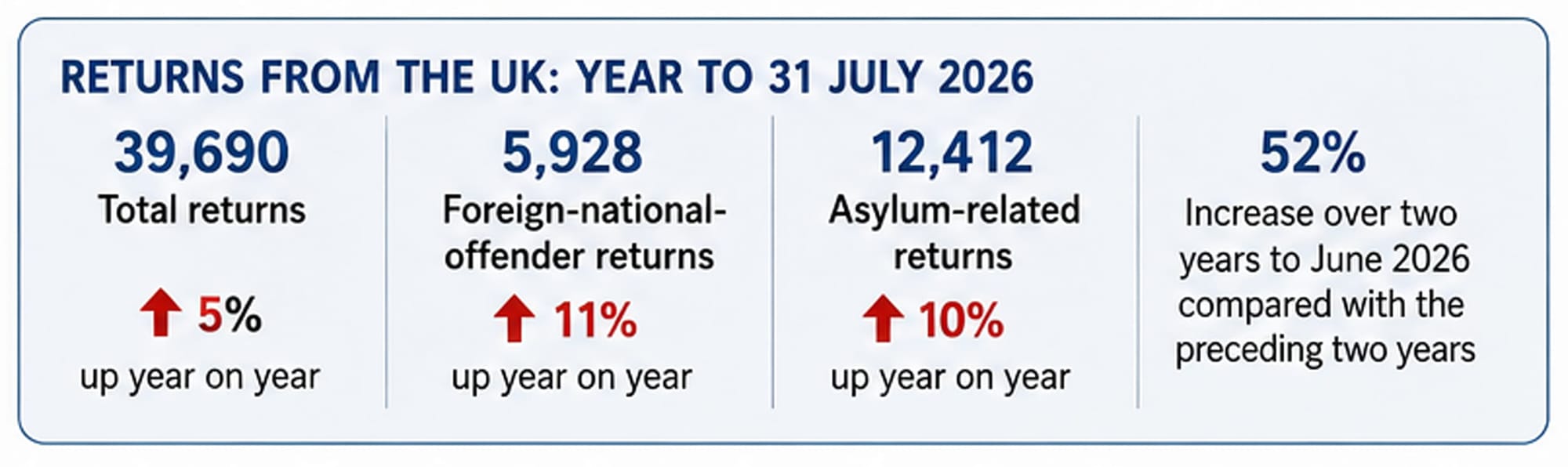
How a pledge covering “every illegal migrant” would work remains unresolved. Home Office figures show that 51% of people leaving immigration detention in the year ending March 2026 left on immigration bail, while 44% were returned from the UK. The Home Office says bail can be granted where there is no immediate prospect of removal or while asylum or other legal claims are being considered.
Reform did not accompany its statement with a new estimate of how many people would be covered, how much additional detention capacity would be required, or a full multi-year costing. Its published statement contains the pledge but no such detailed implementation plan.
The available evidence therefore supports describing Farage’s statement as a broad political pledge whose practical and fiscal feasibility has not yet been demonstrated. It does not establish that the Home Office guidance proves asylum seekers or illegal migrants collectively pose the threat Reform alleges.
🔮 WHAT MATTERS NEXT...
🎯 WHAT TO WATCH NEXT:
● Whether Reform publishes a detailed definition of who would fall under Farage’s pledge.
● Whether the party provides estimates for detention capacity, staffing and total costs.
● Whether new official data emerge that allow more reliable comparison of offending by immigration status.
🎯 MOST LIKELY OUTCOME:
● Reform is likely to continue using the Home Office guidance as part of its wider immigration argument while pressure grows for more detail on how universal detention and deportation would operate.
🎯 WHAT COULD CHANGE THE PICTURE:
● New official crime data, detailed Reform costings or a substantially revised removal plan could alter what can presently be concluded about the claims and their feasibility.
🎯 WHY THIS MATTERS:
● Absolute immigration pledges deserve scrutiny against legal categories, official evidence and the practical capacity required to implement them.

GOING FURTHER
Zia Yusuf: Labour’s guidance shows the government knows illegal immigrants are a menace | REFORM UK
Asylum seekers warned about behaviour in new UK guidance | SKY NEWS
Crime by nationality and immigration status | OFFICE FOR NATIONAL STATISTICS
How many people claim asylum in the UK? | HOME OFFICE
Burnham’s removal claim goes beyond UK deportation law | EUROPEANS TODAY
Reform UK says navy could stop small boats. Is the plan feasible? | THE GUARDIAN
How many people are detained under immigration powers in the UK? | HOME OFFICE
Sources:
▪ This piece was first published in Europeans TODAY on 21 August 2026.
▪ Cover: Dreamstime/KORWEN.