Small boat crossings are down. Why do so many Britons think they are up?
Small-boat crossings are falling, yet millions believe the opposite. From Brexit to Trump, Farage, Musk and algorithmic social media, emotionally powerful political messages can reinforce perceptions that diverge sharply from measurable reality.

🔍 WHY THIS STORY MATTERS
Voters are entitled to disagree over immigration policy. But democratic choices become more vulnerable when emotionally powerful narratives persuade large numbers of people that measurable events are moving in the opposite direction.
KEY TAKEAWAYS...
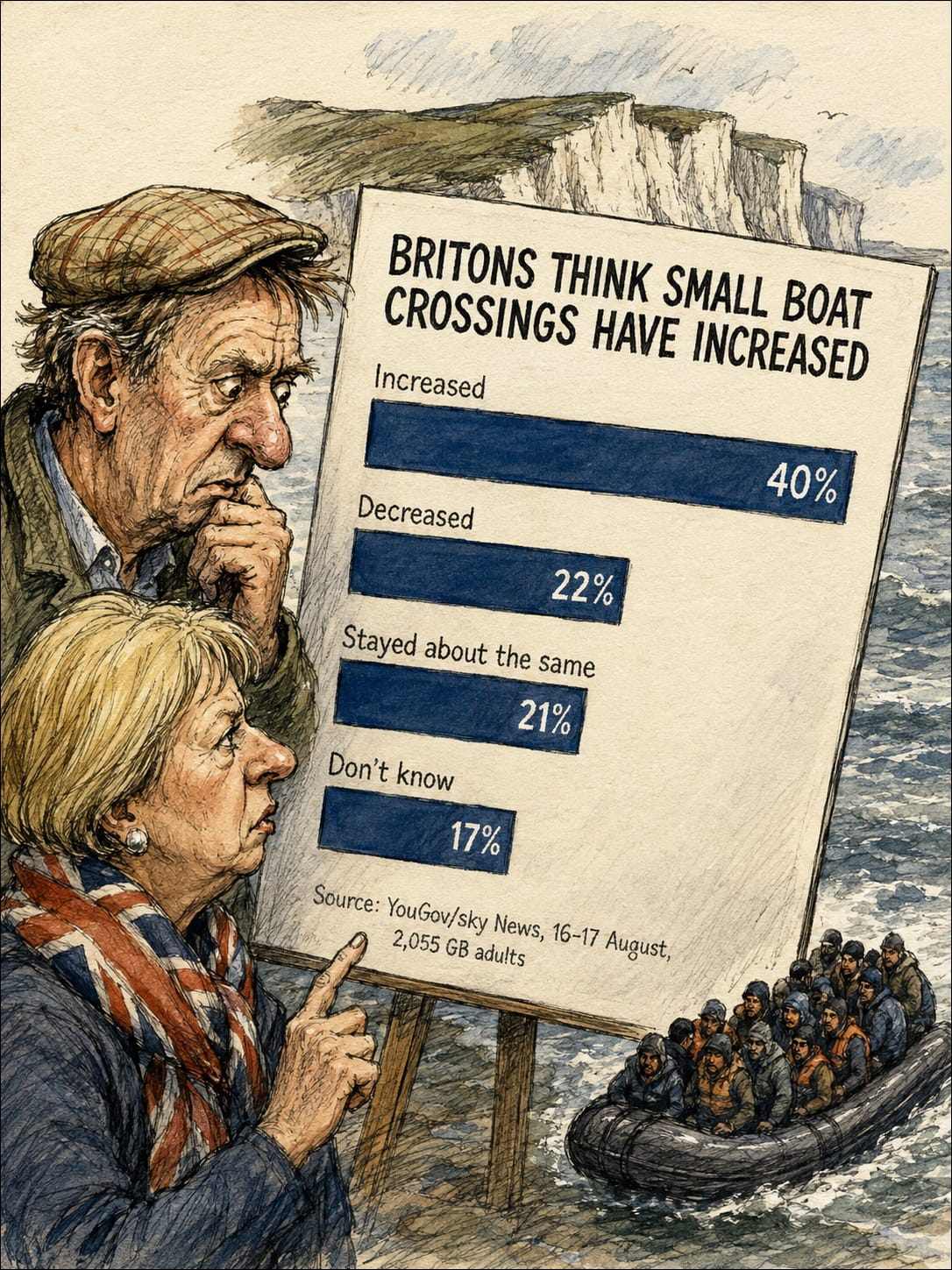
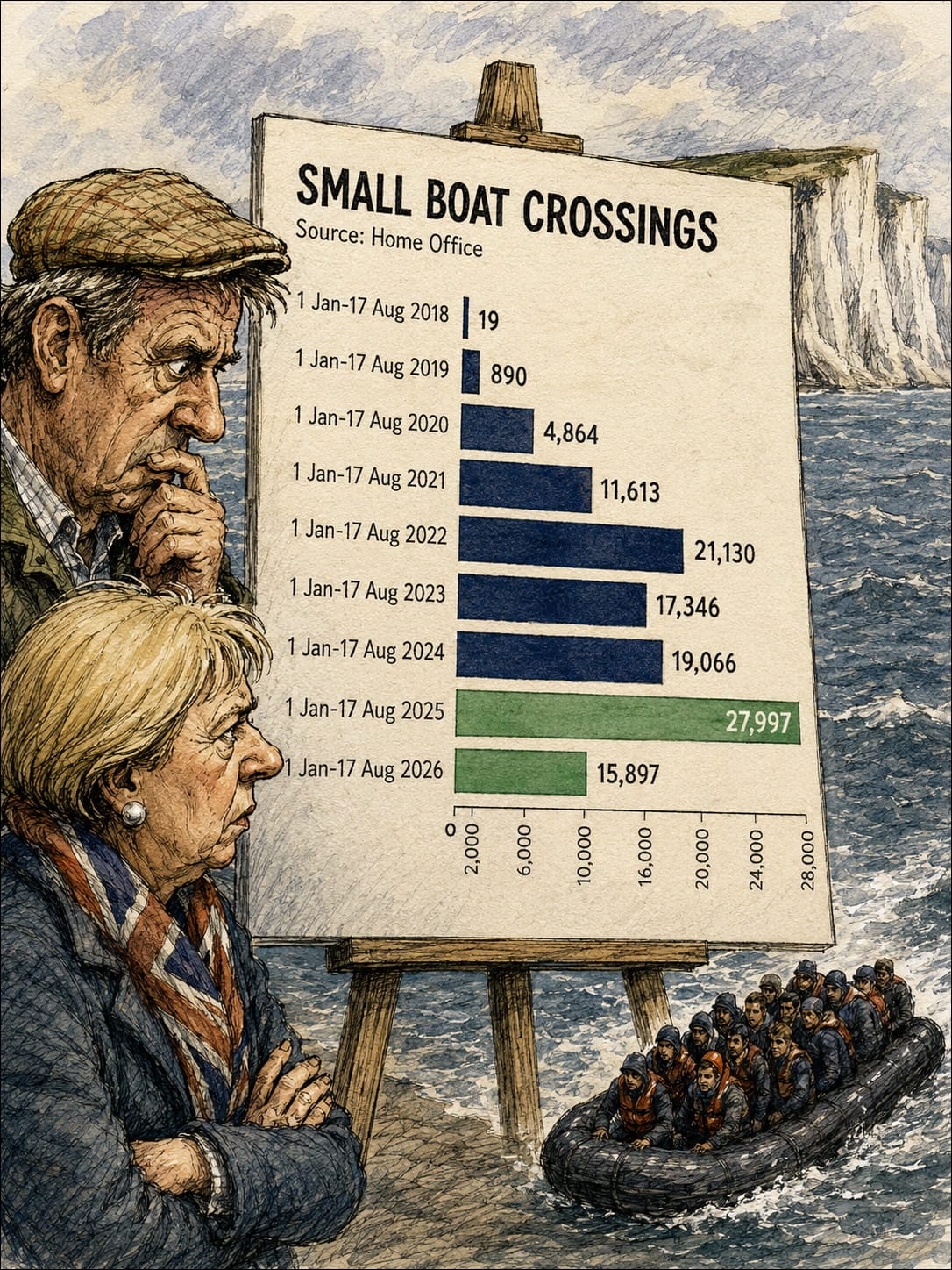
● Small-boat crossings are down 43%, yet 40% of Britons believe they have increased.
● Brexit showed how slogans, migration imagery and disputed claims can make complex political questions emotionally immediate.
● Farage, Trump and Musk demonstrate different ways politicians and influential figures can amplify migration as threat, disorder or “invasion”.
● Research on repetition and algorithmic feeds shows that the information people repeatedly encounter can affect what feels credible and politically important.
B ritain’s small-boat debate presents a striking problem for democracy.
A YouGov poll for Sky News found that 40% of Britons believe small-boat crossings have increased this year. Among Reform UK supporters, the figure was 70%; among Conservative supporters, 56%.
Yet Home Office figures show crossings at their lowest comparable level since 2021. By 17 August, 15,897 people had crossed the Channel in small boats this year, 43% fewer than at the same point last year.
That does not settle the political argument. A voter can look at 15,897 crossings and conclude the number is still too high. But saying crossings have increased is different. That is a factual claim, and the figures show the opposite.
People do not experience politics through spreadsheets. They experience it through headlines, television pictures, politicians, repeated phrases and videos on their phones. A boat arriving on a beach is visible. A 43% annual decline is an abstraction.
Britain has seen this before. During the 2016 EU referendum, immigration dominated many front pages, especially in pro-Brexit newspapers. Vote Leave’s red bus carried the disputed claim that Britain sent the EU £350 million a week and suggested the money could instead fund the NHS. Nigel Farage, campaigning separately, unveiled the “Breaking Point” poster showing refugees at the Croatia-Slovenia border.
Arron Banks, the principal funder of Leave.EU, later described the campaign philosophy starkly: “Facts don’t work... You have got to connect with people emotionally. It’s the Trump success.”
Emotion itself is not the problem. Every campaign appeals to fear, hope, identity or belonging. The democratic problem begins when emotion depends on a false, misleading or disproportionate picture of reality.
CONTINUE READING...
MEMBERSHIP OPTIONS:
You can cancel anytime.
BENEFITS OF MEMBERSHIP:
✅ Read exclusive member-only articles
✅ Read our daily review of the UK front pages
✅ Receive every new article by email
✅ Access all our articles
✅ Get Special Discounts with our partners
✅ Join the conversation: Comment our articles
✅ Access our archives
✅ More importantly: Support independent journalism and keep the magazine going