Reform UK plans birthplace-based priority for social housing
Reform UK’s housing plan would reorder social-housing priorities around birthplace, work, marriage and veteran status, raising questions about the law, supply and equal civic treatment.

🔍 WHY THIS STORY MATTERS
Reform’s plan would change who gets priority for scarce social housing, including treating British citizens differently according to birthplace, with consequences for housing need, citizenship and public-resource allocation.
KEY TAKEAWAYS...
● Reform UK wants British-born workers to receive greater social-housing priority.
● British citizens born overseas would rank below British-born citizens, subject to stated exemptions.
● Marriage, young families and veteran status would also affect priority.
● Reform says it would build 50,000 “socially affordable” homes a year, but important financing and implementation questions remain.
R eform UK plans to give British citizens born in the UK higher priority for social housing than British citizens born overseas, extending its housing policy beyond nationality to distinguish between British citizens according to birthplace.
The policy was formally launched on 24 August and remains consistent with the party’s “British Workers First” agenda presented around its September conference.
Under the proposals, British-born workers under 35 would receive greater priority for available social homes. Married couples with children would be particularly favoured, while veterans would also receive preferential treatment.
Reform says marriage should become a formal allocation factor, requiring councils to give married couples additional weighting.
British citizens born overseas would receive lower priority. Reform has said that people born abroad while their British parents were temporarily overseas would be treated as British-born for the purposes of the scheme.
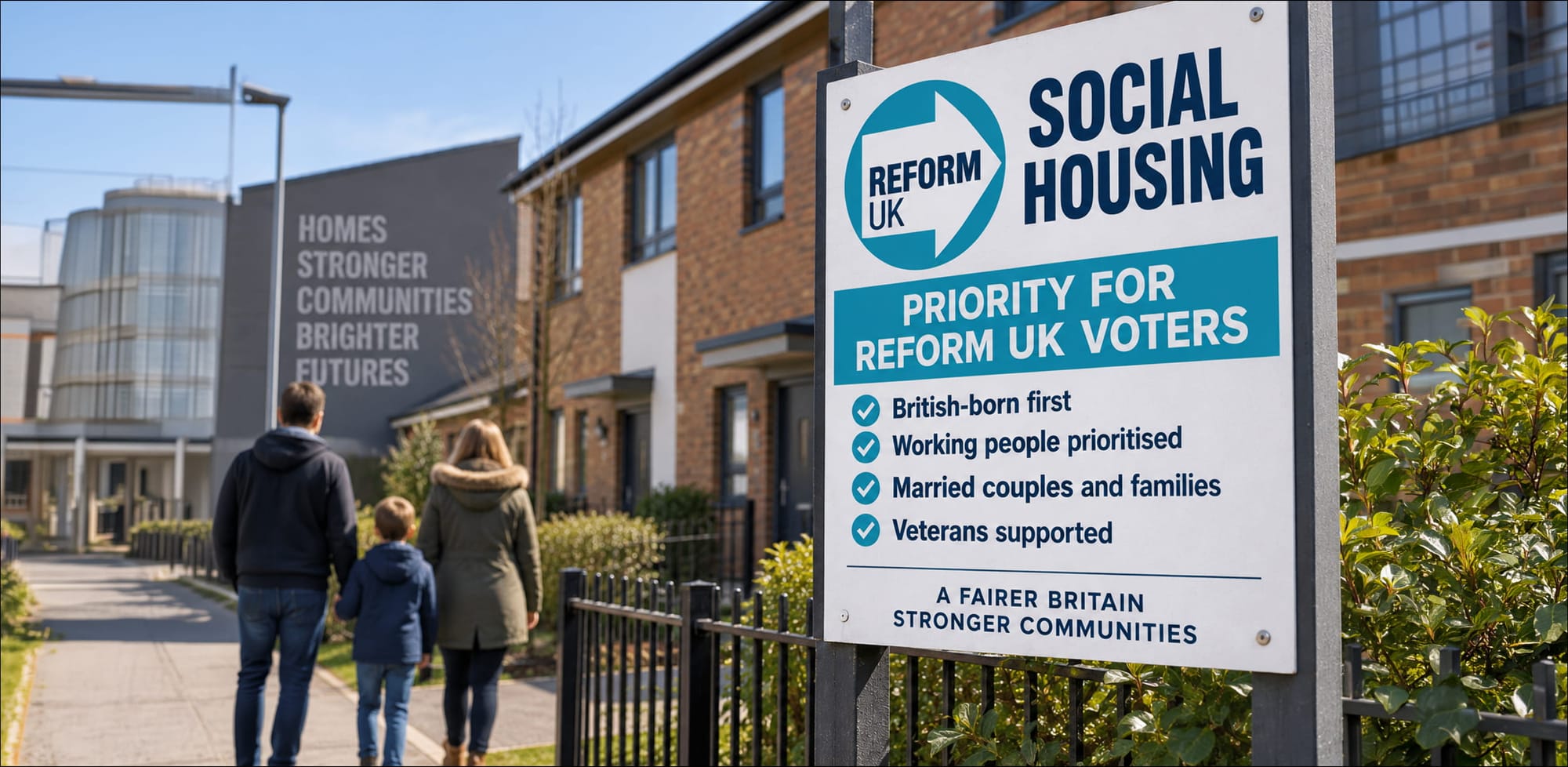
The proposals go further than Reform’s earlier promise to exclude foreign nationals from social housing. That policy would also affect existing foreign-national tenants, whom Reform says should be required to move into private accommodation.
The plans would require substantial changes to the present system. In England, councils must currently give reasonable preference to groups including homeless households, people living in overcrowded or insanitary conditions, applicants with medical or welfare needs and people facing particular hardship.
Housing is also devolved, with England, Scotland, Wales and Northern Ireland operating separate systems.
Reform has additionally proposed tougher obligations for social tenants. Party chair Lee Anderson said tenants could face eviction if they failed to keep their homes and gardens adequately maintained.
The party says it wants 50,000 “socially affordable” homes built each year. Its proposals envisage greater borrowing by housing associations as part of the effort to increase construction, although questions remain about the overall cost, financing and definition of “socially affordable”.
Reform has presented housing scarcity as part of its case for prioritising working British-born applicants. England had about 1.34 million households on local-authority housing registers at the end of March 2025.
But some claims used to support the policy require qualification. Official national statistics do not establish that the “vast majority” of households waiting for social housing are unemployed.
The policy therefore raises two distinct questions: how Britain should increase the supply of social housing, and whether birthplace, employment and marital status should determine priority among people seeking it.
🔮 WHAT MATTERS NEXT...
🎯 WHAT TO WATCH NEXT:
● Whether Reform publishes fuller legislative wording explaining exactly how birthplace would be weighted against statutory housing need.
● How the party proposes to apply its approach across devolved housing systems in Scotland, Wales and Northern Ireland.
● Further detail on how housing-association borrowing would finance the promised 50,000 socially affordable homes a year.
● Whether exemptions or safeguards are expanded for vulnerable applicants, disabled people, homeless households and other existing reasonable-preference groups.
● How Reform would define and enforce the proposed maintenance standards that could expose tenants to eviction.
🎯 MOST LIKELY OUTCOME:
● The proposals are likely to remain subject to legal, financial and administrative scrutiny before they could alter existing allocation rules, with legislation required for substantial changes.
🎯 WHAT COULD CHANGE THE PICTURE:
● Publication of detailed legislation or a revised policy framework that changes the role of birthplace, housing need, exemptions or financing.
🎯 WHY THIS MATTERS:
● Reform UK is proposing to change not only who qualifies for scarce social housing, but how priority would be distributed between people who already share British citizenship.

GOING FURTHER
Reform says it would put foreign-born UK citizens lower on social housing list | THE GUARDIAN
Reform would evict social housing tenants over unkempt gardens | THE GUARDIAN
Reform defends plan to give married couples priority for housing | SKY NEWS
Working Britons given priority for social housing under Reform UK | THE TIMES
Allocation of accommodation: framing an allocation scheme | UK GOVERNMENT
Social housing lettings in England, tenants: April 2024 to March 2025 | UK GOVERNMENT
Social housing and non-UK nationals: parliamentary answer | UK PARLIAMENT
Sources:
▪ This piece was first published in Europeans TODAY on 5 September 2026.
▪ Cover: Dreamstime/KORWEN.